
Here you’ll find a map with pollitical divisions of Peru, available for free download and printing.
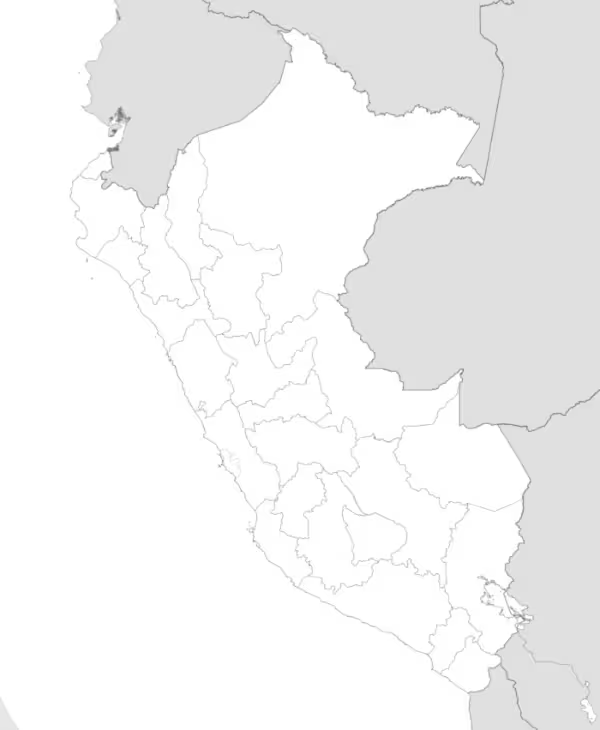
This PDF-format map is an educational tool designed for students, teachers, and anyone interested in learning more about the country’s geography. The map displays international borders and state boundaries but does not include rivers or labels for regions and cities.
Peru is located in western South America, along the Pacific coast. It borders Ecuador and Colombia to the north, Brazil to the east, Bolivia to the southeast, Chile to the south, and is bordered by the Pacific Ocean to the west. The country covers an area of approximately 1.29 million square kilometers, making it one of the largest countries in South America.
Peru has an extensive river system that is divided into three major drainage basins: the Pacific, Atlantic, and Lake Titicaca basins. The most important rivers include the Amazon, which originates in the Peruvian Andes, along with the Ucayali, Marañón, and Huallaga rivers. These waterways are vital for transportation, agriculture, and ecosystems, particularly in the Amazon region.
The geography of Peru is extremely diverse, dominated by the Andes Mountains, which run from north to south and divide the country into three main regions: the coastal plains, the Andean highlands, and the Amazon rainforest. The coast is mostly arid, the highlands feature rugged terrain and high plateaus, and the eastern lowlands are covered by dense tropical forests. This diversity creates a wide range of climates and landscapes.
Administratively, Peru is divided into 25 regions, including the Province of Lima, which has a special status and serves as the national capital area. The country has a population of approximately 34 million people, concentrated mainly in urban centers such as Lima, Arequipa, and Trujillo, while large portions of the interior, especially the Amazon basin, remain sparsely populated.

Map of Peru
Find more content on Mentes Liberadas
That’s all for this article. I hope you enjoyed it.
You can make a donation to Mentes Liberadas through our Ko-Fi account. This way, you’ll be supporting the site, helping us create more content, resources, and online tools.
Thank you for taking the time to read.
See you in the next article on Mentes Liberadas.