
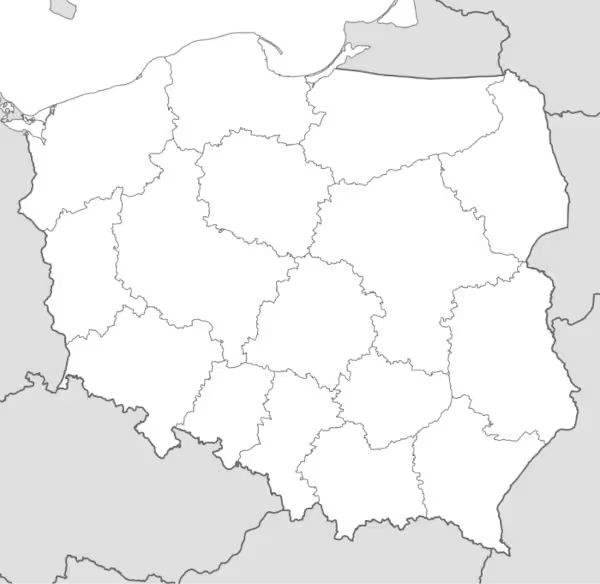
Here you’ll find a map with the political divisions of Poland, available for free download and printing.
This PDF-format map is an educational tool designed for students, teachers, and anyone interested in learning more about the country’s geography.
The map shows international borders as well as the boundaries of Poland. The map includes rivers but does not label regions or large cities.
Poland is located in Central Europe, between the Baltic Sea and the mountain ranges of southern Europe. It borders Germany to the west, Czech Republic and Slovakia to the south, Ukraine and Belarus to the east, Lithuania to the northeast, and Russia (Kaliningrad Oblast) to the north. Poland has a coastline along the Baltic Sea and covers an area of approximately 312,700 square kilometers.
Poland has several major rivers that flow northward into the Baltic Sea. The most important are the Vistula, the longest river in the country, and the Oder, which forms part of the western border with Germany. Other significant rivers include the Warta and the Bug. These rivers are essential for agriculture, transportation, and water management.
The geography of Poland is largely lowland, especially in the central and northern regions, with fertile plains and gentle hills. The southern part of the country includes uplands and mountain ranges such as the Carpathians and the Sudetes. Poland’s varied landscapes also include lakes, forests, and coastal areas, contributing to a temperate climate with continental influences.
Administratively, Poland is divided into 16 voivodeships (provinces). The country has a population of approximately 38 million people, making it one of the most populous nations in Central Europe. Most of the population lives in urban areas, with major cities including Warsaw, Kraków, Wrocław, and Gdańsk.

Map of Poland
Find more content on Mentes Liberadas
That’s all for this article. I hope you enjoyed it.
You can make a donation to Mentes Liberadas through our Ko-Fi account. This way, you’ll be supporting the site, helping us create more content, resources, and online tools.
Thank you for taking the time to read.
See you in the next article on Mentes Liberadas.