
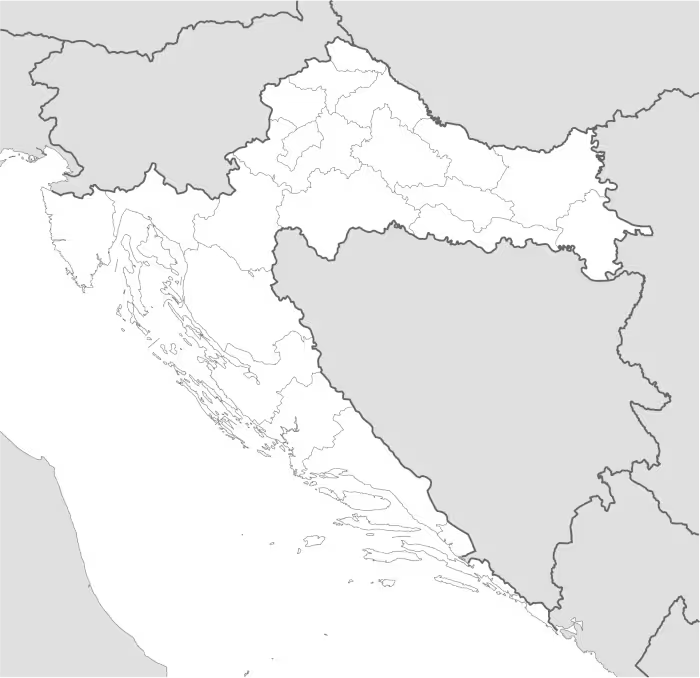
Here you’ll find a map with the political divisions of the Croatia, available for free download and printing.
This PDF-format map is an educational tool designed for students, teachers, and anyone interested in learning more about the country’s geography.
The map shows international borders as well as the boundaries of Norway. The map does not label regions or large cities, and doesn’t include rivers.
Croatia is located in southeastern Europe, in the Balkan region, and has an extensive coastline along the Adriatic Sea, giving it a strategic position in the Mediterranean. It borders Slovenia to the northwest, Hungary to the northeast, Serbia to the east, Bosnia and Herzegovina and Montenegro to the south and southeast, and shares a maritime border with Italy across the Adriatic Sea. The country covers an area of approximately 56,600 square kilometers, placing it among Europe’s medium-sized nations.
Croatia’s river system belongs mainly to the Danube basin. The most important rivers include the Sava, the longest river in the country, as well as the Drava and the Danube, which forms part of Croatia’s eastern border. Other significant rivers such as the Kupa and the Una also play an important role in regional development. These waterways have historically supported agriculture, transportation, and settlement in the inland regions.
The geography of Croatia is highly diverse, combining fertile plains, mountainous areas, and a deeply indented coastline with more than a thousand islands and islets. The Dinaric Alps dominate much of the interior, while the Pannonian Plain in the north and east provides flat, agriculturally productive land. Along the Adriatic coast, the landscape is characterized by beaches, cliffs, and archipelagos, contributing to Croatia’s strong tourism sector. Climatic conditions vary from continental in the interior to Mediterranean along the coast.
Administratively, Croatia is divided into 20 counties (županije), along with the City of Zagreb, which has a special status and serves as the country’s political, economic, and cultural capital. Croatia has a population of approximately 3.9 million people, with a significant share living in Zagreb and in major coastal cities such as Split and Rijeka. In recent decades, the country has experienced notable demographic changes, including population decline and aging, influenced by migration and broader regional trends.

Map of Croatia
Find more content on Mentes Liberadas
That’s all for this article. I hope you enjoyed it.
You can make a donation to Mentes Liberadas through our Ko-Fi account. This way, you’ll be supporting the site, helping us create more content, resources, and online tools.
Thank you for taking the time to read.
See you in the next article on Mentes Liberadas.